

English
Cloud computing applications are shifting towards traditional industries, with government and finance sectors as breakthroughs.
2017-02-16


Over the past decade, cloud computing remained largely conceptual for a considerable period, falling short of its initial goal of providing businesses with on-demand access to computing resources, much like electricity or water. Technological advancements follow an inherent logic; before maturity, even aggressive corporate attempts couldn't truly accelerate industry development. Now, cloud computing is maturing in both technology and business models, with surging enterprise adoption fueling market prosperity.
2016 saw cloud computing gain significant traction, driven by increased awareness of artificial intelligence and industrial transformation. Jack Ma's vision of cloud computing as a utility like water and electricity, a vision Alibaba Cloud actively pursued, including establishing numerous overseas nodes, is highlighted in their 2017 Q3 financial report: Alibaba Group reported RMB 1.764 billion (USD 254 million) in Alibaba Cloud revenue, representing a 115% year-on-year increase.

Even in rapidly growing international markets, this 115% growth rate rivals that of global giants investing heavily in cloud computing. On February 3rd, Amazon announced its 2016 Q4 results, with Amazon AWS cloud services achieving Q4 net sales of USD 3.536 billion, a 47% increase year-on-year from USD 2.405 billion, exceeding the previous year's USD 580 million.
Microsoft's financial report shows its cloud computing product Azure doubled its revenue to USD 6.9 billion. Revenue from commercial Office products and cloud services increased by 5% year-on-year; Office consumer products and cloud services grew by 22%; and Dynamics products and cloud services revenue increased by 7%. Google's other revenue, including cloud computing, grew by 62%, reaching USD 3.4 billion. Thanks to the major players' cloud computing investments, Intel's cloud computing sales increased by 30%, with server chips becoming a key driver of its growth.
The significant growth in 2016 suggests that the global cloud computing market may truly enter an explosive growth phase in 2017. A clear trend is the focus on artificial intelligence by these companies. Furthermore, the cloud computing market, initially a simple solution for small and medium-sized companies to run websites, is gaining acceptance among larger corporations as an efficient way to achieve stable, powerful, and fast computing capabilities.
The increasing importance of cloud computing in major companies' financial reports signifies more than just growth; it has implications for the domestic cloud computing market.
The domestic market has undergone a significant shift from private to public cloud.
Cloud computing, through distributed computing, makes powerful computing capabilities accessible to everyone. Unlike traditional IDC service providers, the traditional server sales model is outdated. Cloud services are significant not only for large enterprises but also for SMEs, providing more than just virtual storage; they unlock numerous application possibilities.
According to the "Cloud Computing White Paper (2016)" released by the China Academy of Information and Communications Technology (CAICT), China's public cloud services are expanding from the internet to industry markets. The overall market size in 2015 was approximately RMB 10.24 billion, a 45.8% increase from 2014. The domestic public cloud service market is expected to maintain rapid growth in 2016, reaching a market size of nearly RMB 15 billion.
This growth is driven by the shift in cloud computing applications from internet sectors (gaming, e-commerce, mobile, social media) to traditional industries (manufacturing, government, finance, transportation, healthcare), with government and finance sectors as key breakthroughs.
Cloud computing and big data are inseparable. For traditional enterprises, especially state-owned enterprises, storing sensitive data on overseas cloud platforms is clearly inconsistent with national strategies, particularly regarding information security. However, the need to move to the cloud is urgent.
Take the Spring Festival travel ticket purchasing system (12306) as an example. It's hosted on Alibaba Cloud's platform. In addition to the platform's own concurrent access volume, numerous ticket-booking apps often overwhelm the system with instantaneous concurrent requests, causing server crashes—a familiar experience for many Chinese citizens. Before cloud services, the 12306 system's frequent crashes were a painful memory for those buying tickets during Spring Festival. Such billion-level concurrent access scenarios are rare internationally, and the Chinese solution, besides demonstrating cloud computing capabilities, showcases China's leading technological prowess.
Due to data security concerns, many companies previously opted for private or dedicated clouds. For state-owned enterprises like 12306 (under the Ministry of Railways), using public cloud was once unimaginable. This change is due to government encouragement. In 2015, the State Council issued "Opinions on Promoting the Innovative Development of Cloud Computing and Cultivating New Information Industry Formats," highlighting cloud computing in several key national documents.
China Unicom, CNPC, Sinopec, the General Administration of Customs, XCMG Group, the China Meteorological Administration, and BGI Genomics, among other government agencies and enterprises, have become major Alibaba Cloud customers. This has created a unique closed-loop domestic cloud market, significantly benefiting the development of the domestic cloud service market.
According to Jack Ma's vision, once public cloud becomes infrastructure, the trend of shifting from self-built private and dedicated clouds to public cloud is irreversible. This presents significant future growth potential for the overall Chinese cloud market. This transformation is just beginning. Alibaba Cloud's goal of becoming "infrastructure" extends beyond mere revenue growth; it involves handling massive data uploads to the cloud, offering profound social value. Current examples show a clear impact on improving people's lives, enhancing government efficiency, and boosting business value and productivity for enterprises.
Openness, Interoperability, and Computing Power: Cloud Services Transform Traditional Industries
Beyond powerful computing capabilities, cloud computing has numerous applications in many traditional industries. For example, Cainiao Network's system connects the logistics industry and businesses, covering warehousing, inventory management, order fulfillment, sorting, and delivery. Businesses can predict future order volumes, and couriers can anticipate their workloads.
This transformative potential extends to almost all traditional industries. This transformation leverages traditional industry strengths: early regional development often stemmed from increased production efficiency (e.g., assembly lines, distributed production). However, production information is often fragmented, a problem cloud computing can solve.
Such attempts are underway in other industries. PTC, a leading international IoT platform provider, is exploring this, using its ThingWorx system to connect new IoT application needs with MES (Manufacturing Execution System) via interfaces, creating comprehensive solutions and avoiding overloading complex MES systems.
Common benefits include rapid production monitoring. For manufacturers with concentrated production, data collection eliminates the need for on-site servers, and analysis reports can be sent directly to managers' mobile phones for real-time updates.
Overall, the explosive growth of cloud services in the international market may bring even greater opportunities for domestic cloud services. Firstly, there is China's vast market. In terms of policy, localization, and technological practicality, it is unlikely that major cloud service providers like Google, Amazon, and Microsoft will enter the Chinese market and gain significant market share. China's national conditions provide Chinese companies and domestic giants like Alibaba Cloud with time and space to develop.
From servers to private clouds and then to public clouds, users choose cloud computing hoping to transfer the cost of previous hardware investment to more convenient services. This is perhaps the simple understanding of many traditional enterprises when choosing cloud services. Currently, cloud services are actually built on the basis of cloud computing. The simpler and more convenient the cloud services, the faster the efficiency of industrial transformation in traditional industries will be in the future. Cloud services provide more than just computing services; ultimately, in the future, based on openness, interoperability, and computing power, they will ultimately transform enterprises and industries. This is the ultimate value of cloud services for the industry.

Related Info
Welbell | AI Smart Sports Management System
2023-11-24

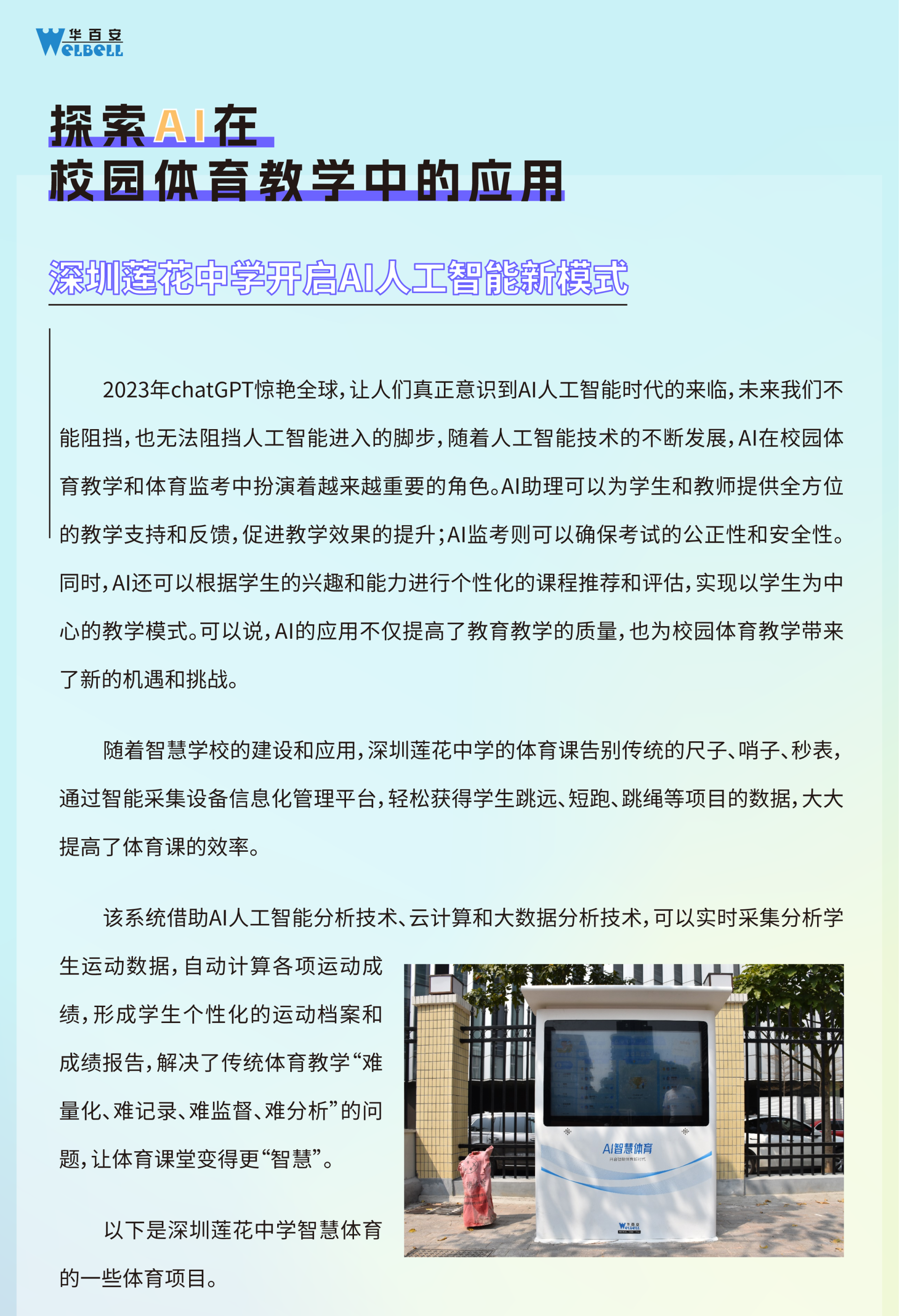
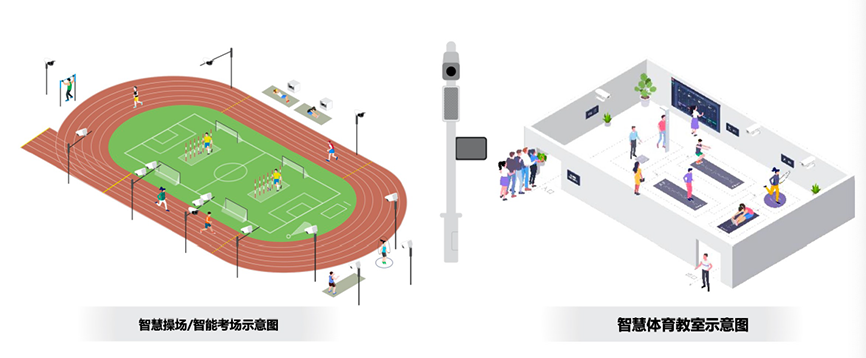

Welbell | Smart Campus Management Solution!
2020-03-26







Follow WeChat Official Account
Leave a Message
Customer-centric, thinking what customers think, allowing customers to get satisfactory and high-quality service more quickly.